Wednesday, March 16, 2011

Staying Organized

Submission by Janine Cavanaugh , Professional Organizer
     As a Professional Organizer I’m often asked by the homeowners I work with, “How can I stay organized?” They explain that they spend time creating order and buying cool organizing products to help them stay organized, but in two months, things look just like they did before. In addition, their cool new organizing products are not helping or worse, they’re not even being used.

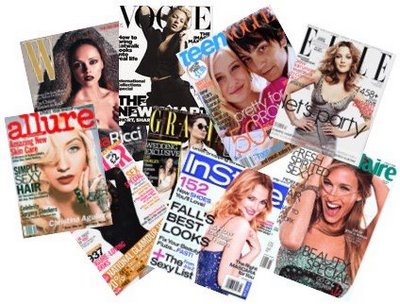
     The best way to answer their question is to share this example. Imagine you have magazines all over your house, piles of them here and there, and you have a hard time throwing them out. You decide something needs to be done with them. So, you purchase a few magazine racks to help corral them. Great! Problem solved, right? No! In a few months the magazine racks are overflowing and magazines are finding their way to other parts of your house again. So, what can you do?

     You need to complete the organizing process. I call it the ‘creating guidelines phase’. By purchasing the magazine racks you have created a place for them to be kept, but now you need to create some guidelines for yourself pertaining to those magazines. The guidelines help you decide how long to keep each magazine and when you have enough magazines.
     Guidelines take the form of questions, and I find it helpful to write them down.
     Here are a few examples:
  1. How long will you keep a single magazine issue?
  2. What are the deciding factors for keeping an issue longer than the given timeframe?
  3. What is the maximum number of magazine issues you will keep at one time?
  4. As many as will properly fit in the magazine racks?
  5. Once that maximum number is reached, will you practice the one in, one out rule?
  6. How frequently will you go through the racks to prevent stockpiling?
     Answering these six questions and establishing a system to process your magazines, enables you to keep them organized. By practicing the process and having a little self discipline you should be able to stay organized.

     These guidelines can be modified to fit other items in your space. If you are struggling with the ‘creating guidelines phase’ I recommend using the six sample questions listed above to help you establish organizing systems for the things and paper in your life.

©2010 Janine Cavanaugh, Professional Organizer. All Rights Reserved

For more information or a consultation please contact
Janine Cavanaugh at
(508) 699-6652

Monday, March 14, 2011

Blogging is Writing!

Submission by Jen Vondenbrink - Life Simplified

 I was inspired to tag onto Fran’s Blog about Writer’s Block Unblocked.

     If you haven’t read the post, and you are thinking of doing any writing or blogging, I would encourage you to grab a cup of tea and read it.  She offers great grounded advice about writing.

    Why plug Fran’s post when I usually write about social media?

     Staring at a blank page, be it paper or computer, is just plain daunting.  You feel out of ideas and rather silly staring at the page before you.  Soon you find anything else to do besides writing…even laundry.

     For bloggers, it’s important to sit down on a regular basis and write.  Take it seriously.  You are a writer.  Stephen King didn’t casually write his books.  He sat down every day to write.  You as a blogger need to be just as disciplined.

    Why?

     Because keeping your content fresh is the first step in gaining an audience.  Have you ever stumbled upon a blog and the last post was six months ago?  How much confidence do you have in the information the blogger shared?  In our own minds we can justify the vacation, but our readers don’t care.  They want consistent information they can count on.

     It’s a huge boost to your business when you do blog consistently.  As Robin Clapp can attest, the more your information gets shared around, the better your website/blog will come up in a search on Google.  This means your ideal customer, sitting right now at the computer looking for you can find you, easily.

     As Fran says “the more you write the easier it gets.”  So look at your calendar.  Set up a schedule.  And start writing.  Then follow Fran’s instructions:
The trick… is to just sit down at my computer and start writing what I know about the topic, even if it sounds weird. It physically and mentally loosens me up, like a warm-up exercise.

     I’ll add to that.  For bloggers, you don’t have to write a novel.  If you have 200 words, that’s fine.  Today many people prefer shorter blogs they can read on their phones, etc.  You’ll find some topics warrant a couple short posts rather than one long post.

     So what’s stopping you?  This is a great forum to practice.  With all the warm support at WBN, you can’t go wrong.  Can’t wait to see your next post.


Jen

Jen Vondenbrink
Life Simplified
Life Enrichment and Leadership Training781-864-1782

Sunday, March 13, 2011

Why do women LOVE to wear jewelry?


Submission by Meus Kaveny, Stella & Dot Jewelry

Why do women LOVE to wear jewelry?  Different reasons, for sure.  Some wear them to showcase their personality.  Others wear them to show how they are feeling that day.  Still others wear them for the sentimental memories their jewelry pieces bring. 
I wear my Stella & Dot jewelry because I want to look chic & stylish.  Jewelry can do that, especially Stella & Dot (that’s a little plug ).

Anyway, whatever your WHY is, you will love reading this article.  It’s has wonderful advice on HOW to wear your jewelry. 
Should I go for a statement piece?  

Should I mix silver & gold? 

 What’s the right necklace length for which neckline? 

 What kind of jewelry is appropriate for my age and body type? 


 Melissa Kagan answers these questions in JEWELRY DOS & DON’TS – WHAT EVERY WOMAN SHOULD KNOW.  (Click to Read on…)


Cheers,
Meus Kaveny

Thursday, March 10, 2011

What's In YOUR Closet?


Submitted by Susan Finn - Buttonwood Originals 


Chances are, I have never been in your home.   

But this is what I already know about you ….

Somewhere in your home….in your closet, in the back of your drawers, in your laundry room, in your attic, in your mother’s attic….. you have at least one piece of clothing ( at least one…..most likely more) that you will never…EVER…wear in public again in your entire lifetime! 


 I also know this about you  (sort of creepy...I know)  You absolutely will not, CAN NOT, throw that piece of clothing away...you’re not even able to donate this piece of clothing to a worthy organization.  
    
  These fabrics are holding a deep, meaningful memory for you.  It could be a smell that elicits a memory (I kept my grandfather’s button-down shirt for over 10 years). Perhaps the texture of the piece elicits a memory of comfort and peace.  ( I still miss my baby blanket with its worn polyester quilted center, and especially its satin edging - how many times that blanket soothed me - through my parent’s divorce, through boyfriend break-ups, through numerous hair-too-frizzy-to-go-out nights ) 

      Most commonly, the piece of clothing brings us back to a certain moment in our life we would like to remember -  a great concert, a family reunion, a road race, a sporting event, etc.
Time get them out of the closet and into a life of usefulness, love, cuddles and sharing.     You can wrap yourself in your memories with a quilt made from your own collection of t-shirts. 


What kinds of items can be used in a memory quilt?   You can use pretty much any thing in a memory quilt.  We have used hats, karate belts, newborn onesies, hair ribbons, doll clothes, back packs, sheets, scarfs, nightgowns, and more!    The goal is to create an item that holds memories for you.


 At Buttonwood Originals, we take time to sit with you to go through your selections of items to discuss  the memories each one holds for you.  We work out the ideal layout, size and backing for your finished product.    It is our mission that we help you to preserve the fabrics of your life.


For more samples of our products, 
please visit our online portfolio.  Buttonwood Originals . 


With warm and comforting wishes . . .

Susan Finn       
   Buttonwood Originals  -  For the Fabrics of Your Life 

Tuesday, March 8, 2011

WWW.What the Heck?


Have you looked at your business web site lately?

  Maybe you’d better.  As a matter of fact, pull it up right now and look at it as you read this.

How well does your web copy communicate what you want it to say?  As Dr. Phil would say, “How’s it working for ya?”

What I do most often is write web copy for my clients. Web copy is different from the copy you’ll see in other types of marketing vehicles. We web surfers, well, we just don’t have the time to read a full sentence.  So, you have only a few seconds to grab people’s attention and make your case, before they go on to the next site.

Readers will ditch your site right away if they are:

·        Bored by your presentation,
·        Confused by what you are trying to say, or
·        Overwhelmed by all the stuff you throw at them.

So, make sure your site is written for your customers, not for your own entertainment.  Here are some quick tips, supported by my gurus in web content, like Robert W. Bly:

·        Be personal. Use “I” and “you”. The web is a conversation between two people: the potential customer and you. Let them know what you can do for them—don’t lecture them.

·        Be organized and brief. Don’t use long paragraphs, or try to fit too much on one web page. Break your text into short paragraphs of no more than 2-3 sentences, and use lots of bulleted lists (like this one) to make your page easy to scan.

·        Use headlines and questions that immediately get at the heart of what your customers need.

·        Use only enough photos, videos and animation to educate your customer and make your case. Too many of these, while fun and attractive, can be a distraction from your central purpose.

·        Close your “sale” with an easy way for people to get in touch, using a clearly visible phone number, address, email, contact or order forms, etc.
If your site doesn’t pass the test, then get help from a good web designer or copywriter.

Fran Fahey


Submission by Fran Fahey Fran’s Fine Editing

Thursday, March 3, 2011

Do you own your website? (Part 1 - domain name ownership)

Submitted by Robin Clapp -   Web Design by Robin

This is part 1 of the series "Do you own your website?".  Today you will learn what a domain
name is, how to find out who owns it, and why domain name ownership is important.

What is a domain name?
We all love to name our websites. So what is a domain name?

       A domain name starts with www. and ends with an extension such as .com, .org, .net etc. I choose www.web-design-by-robin.com for my business website. Extension .com stands for commercial and is the most commonly used and therefore easily remembered.
      Another common term is URL. The URL for my website is http://www.web-design-by-robin.com/. The HTTP in front of a domain name actually tells the web browser to go find and fetch the website. That's right, somewhere out in the world wide web (www) is a record that knows exactly where your website lives. When you type an URL in a web browser you are actually giving it a command to do two things: find the website and fetch its contents to display on your screen.

How do I check my domain name ownership?

       When you buy a domain name you are registering it in your name - or at least I hope you are.  If you did not perform the actual purchase than you should probably check to make sure your domain name is registered in your name.
There are a million places online to do this.  I prefer Godaddy’s Whois Database Search: http://who.godaddy.com/

Why does your domain name need to be registered in your name?

    While the Whois database search returns a lot of information the most important is the Registrant. You want to be listed as this person. You may hire someone to design, code, update and maintain your website but there is one task that you need to do yourself, OWN YOUR WEBSITE. Obvious right?
What do you need to own? You need to own your domain name. While technically speaking you are only leasing a domain name, it still needs to be in your name.  This brings up a good point.  Domain names are temporary items.  They are bought, sold, expired and bought by someone else.  They are relatively cheap if you buy one that is open and free for purchase, around $10 a year.  If a domain name is registered, therefore already owned, the only way you can get it is if the owner is willing to sell it to you.  Do you have that kind of time and money?
      I can’t recall the number of times I have had potential clients approach me and ask me to take over their website without having the slightest idea about domain name registration. As you have learned its not that hard for me to look it up - piece of cake! But the minute I see its not registered in their name I start to choke on that once delicious piece of cake. What started as an easy everyday task turned into a nightmare! If your name is listed you can do whatever you like with your website.  If it is not you have two options - recover it or start from scratch with a new domain name.  Its like deciding what you want to eat for dessert between broccoli or spinach - YUCK!
       When I am working with my clients starting a website design from scratch - the first step I have them do is buy the domain name so that it is registered in their name...  Make sure you do the same if you do nothing else!

Robin Clapp
Web Design by Robin


Note from the WBN Blog editor:  look for next week's post from Fran's Fine Editing:  "WWW - What the Heck !" with  advice and info on improving your website appearance and content.

Wednesday, March 2, 2011

Livin’ Large at the Library

Submission by Fran Fahey of Fran’s Fine Editing


     When’s the last time you went to your local library? Do you know what they can do for you?

     About a year ago, I almost cried when I read about the possible closing of many of the Boston Public Library branches due to shortage of funding. Thank goodness it has not come to pass, so far. Brian McGrory, one of my favorite Globe writers, captured my feelings perfectly in his 2/26/10 article, Treasure Islands at Risk.

    After you read Brian’s article, do you still say to yourself, “Who cares?” Well, I care. Let me tell you why.

      As someone who’s experienced my own funding shortage, I have used my local libraries, in Berkley, Taunton and Easthampton, for my pleasure reading and for work. I love the homey feel of each small library, the smell of polished wood and aging books, and the idiosyncracies of each employee, many of who have become my friends over time. There’s nothing quite like having someone look up from what she is doing and smile when I come in the door, ask what she can do to help me—and it’s not home, where my wife Jean has to welcome me, and I’m not buying anything from her, either . . . well, except for the time we accidentally dumped the latest Stephen King into the washing machine and we had to pay for a replacement copy.

      When I walk into the Emily Williston Library, I read the bulletin board, which tells me about the local CSA farm I can join to get my organic veggies, and the writers’ group that meets each week. I love to read the titles of books and flip through them (begone, Kindle, until I can no longer see the words!). Hard covers, soft covers, old ones falling apart, new ones that haven’t yet been opened. I can order a book online from any library in our system, and have it appear in my own library as if it flew there on a magic carpet, reserved just for me. I even go there to get help with research from human beings, if my Internet searches fail me.

     I haven’t even mentioned all of the other things libraries offer: Wi-Fi, CDs, DVDs, museum passes, kids’ programs, meeting space. All free.

      I’ve tried to show my thanks to each library for being there for me. I’ve given small donations to the Friends of each library, and gave up most of my own books to them to sell at their book sales to raise money. It’s not much, but it’s better than thinking about never having a library to go to.

Fran Fahey